
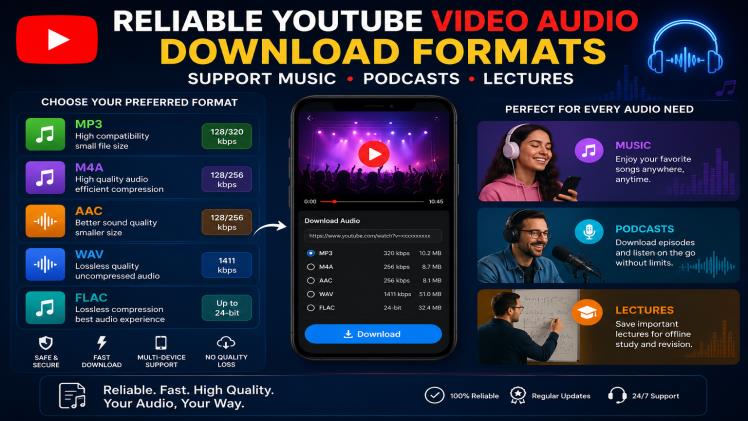
 People often save audio when a full video is not needed.A youtube video audio download can make spoken lessons or music easier to keep for personal offline listening.Audio files usually need less storage than complete video files.The right format can also suit phones or computers more comfortably.Music may need richer sound while lectures often work with smaller files.
Audio Format Basics
Audio formats affect sound quality plus storage use.Some choices focus on smaller files for everyday listening.
Others keep more sound detail for music collections.The suitable option depends mainly on the saved material.
Matching Listening Needs
Music listeners often notice sound detail more closely.Podcast listeners usually value clear speech plus manageable storage.
Lecture recordings need voices that remain easy to understand.Choosing by content type keeps saved audio useful.
Format Choices Shape Everyday Listening
A suitable audio choice makes regular playback easier across common devices.Simple format checks also prevent unnecessary storage use before saving.
- MP3 works well for music collections across common playback devices.
- M4A often provides clear sound while keeping storage needs moderate.
- AAC suits spoken recordings where clean voices matter during playback.
- WAV keeps rich detail but usually requires much larger storage.
- Lower bitrates suit long lectures when speech remains clearly understandable.
- Higher bitrates preserve musical detail for careful headphone listening sessions.
- Smaller files make lengthy podcast collections easier to organize locally.
- Common extensions reduce playback problems across phones, tablets, and computers regularly.
Storage Planning Improves File Management
Long recordings can fill device storage sooner than expected.A short song needs far less space than a long lecture.
Checking available room before saving prevents unwanted file removal later.Simple folders also keep different audio types separated clearly.
How Do Audio Formats Affect Different Listening Purposes?
Each listening purpose places different demands on an audio file. Music often sounds better when more detail remains in the recording. Podcasts mainly depend on clear speech. Lectures may run for an hour or longer. Smaller files can therefore make more sense for study material. A youtube video audio download should match the expected listening habit rather than use the same setting every time. This approach keeps storage under control while maintaining useful sound.
Device Support Keeps Playback Simple
Common audio types usually work across several everyday devices.Checking playback support before saving can prevent later conversion work.This matters when files move between phones, tablets, or computers.
Audio Format Reference Table
The figures below show common audio format characteristics for general reference.
| Format | Typical File Extension | Compression Type | Common Strength |
| MP3 | .mp3 | Lossy | Wide compatibility |
| M4A | .m4a | Usually lossy | Efficient storage |
| AAC | .aac | Lossy | Clear compressed sound |
| WAV | .wav | Uncompressed | High sound detail |
| FLAC | .flac | Lossless | Reduced size without detail loss |
Common Listener Questions
These short answers address common doubts people have before saving audio.
- Which format suits ordinary music listening? MP3 offers broad support for routine playback.
- What works well for spoken podcasts? AAC can keep voices clear with modest storage.
- Do lectures need very high sound quality? Usually clear speech matters more than richness.
- Which choice uses more device space? WAV generally creates much larger audio files.
- Will every format play on my phone? Support depends on the device and installed player.
- Should long recordings use smaller files? Smaller formats can make storage management easier.
Clear Choices Support Better Organization
Choosing formats by listening purpose keeps personal audio collections easier to manage.Music podcasts plus lectures do not always require identical settings.
File size, sound clarity plus device support deserve separate consideration.A balanced choice keeps everyday listening simple without wasting storage.
Consistent Choices Improve Listening Habits
Reliable audio saving depends on matching each format with its purpose.Music may deserve extra detail while spoken recordings often need clear voices.Storage limits should also guide choices before large collections begin growing.Simple naming plus suitable formats make personal files easier to maintain.Good results come from consistency and steady follow-through rather than perfection.